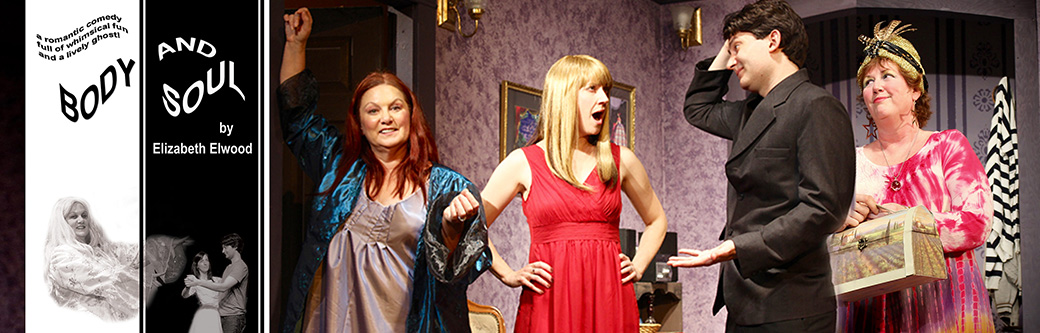
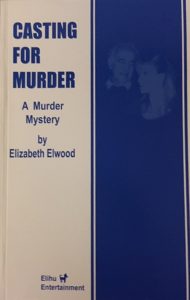
The Vagabond Players’ world premiere production of Body and Soul was a great hit with New Westminster audiences. This lively romantic comedy with spirited ghosts is to be produced again this fall, while Casting for Murder is up soon for a new production in Ontario.
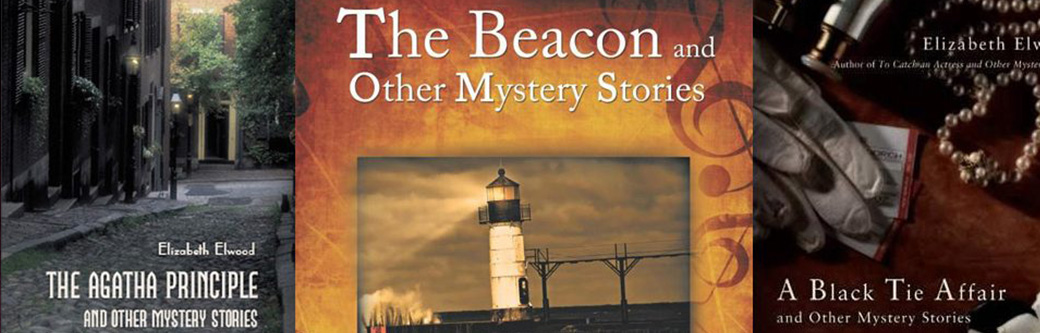
“…riveting mysteries…once they’ve experienced the entertaining and engrossing stories in The Agatha Principle, satisfied readers are very likely to seek out the other books in the series as well.” ***** —ForeWord Clarion Reviews
I love to read mystery stories, new ones hot off the press and old favourites from times past. Currently, I am revisiting much-loved Agatha Christie classics and enjoying the intricate twists and turns of her clever tales. My husband, who shuns fiction—he’s an accountant who considers The Financial Post light reading—says that reading a steady diet of murder mysteries makes me paranoid and that I see sinister plots everywhere, but, ironically, the one time that I became involved in a murder, I had no idea that death was in the air.
So begins How Mary’s Garden Grew in the January/February 2024 issue of Ellery Queen Mystery Magazine. Don’t miss reading this intriguing tale, described by one reader with the following words: “With its well-crafted characters—characters you start caring for—this is a suspense story that the Queen of Crime herself would have been proud of writing!”
***
A dinner-dance, costume-party cruise on the Island Queen; a New Year’s Eve fireworks display; a drop-dead gorgeous blind date: it should have been the perfect night out. How was Lucy to know that someone had murder in mind?
But who is planning it? The choice is wide, and it’s definitely not Colonel Mustard or Miss Scarlet. On board are Prussian soldiers, pirates, Roman emperors and Egyptian queens, not to mention Lord Voldemort, Barbie, Elvis and Elton. Read All Decked Out for New Year’s Eve at https://blackcatweekly.com/b/p28T1
***
What happens when The Devil himself yields to temptation? In the case of a libidinous baritone whose long-suffering wife is showing signs of rebellion, a diabolical plot seems to be the answer. In that lazy summer on the French Riviera, a question lingers in the air. Will the Devil get his due? Find out when you read The Devil and the Deep Blue Sea at Black Cat Weekly #117
On Remembrance Day, I have many people to remember, not only family members who served in the armed forces, but also a number of wonderful friends, long since passed on, that I knew during my years as a volunteer at the George Derby War Veterans’ hospital. However, the one that always comes first to mind is Charles Field, the grandfather I never met, and with him, Emma Field, the grandmother he left behind.
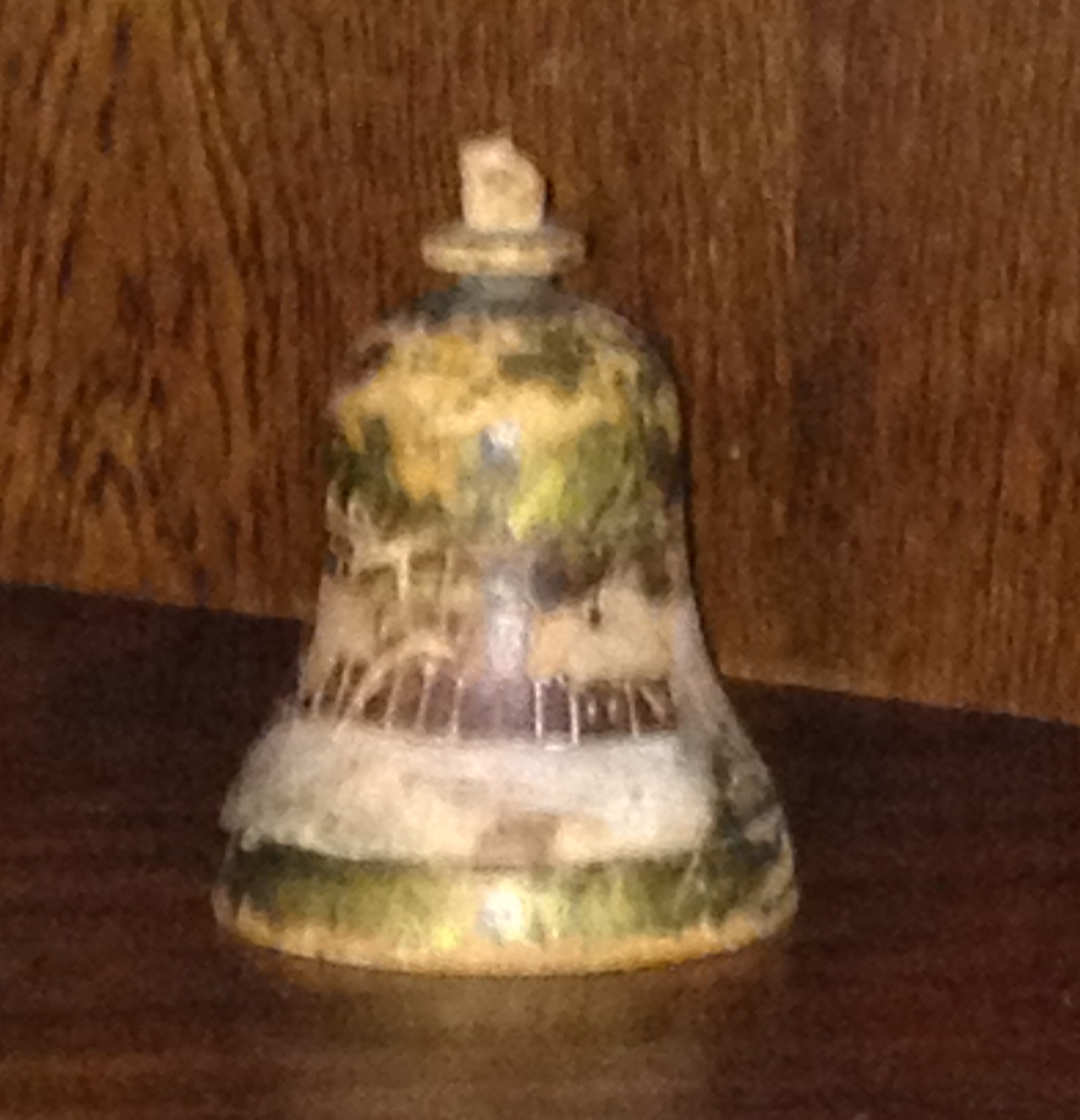
Allen & Hanburys – around since the 1800sA gift for Emma – The Bell Charlie brought back from France when he had leave.
Charles Field was the batman to Captain Hanbury, a member of the family who had started the Allen & Hanbury pharmaceutical company. The story, as my mother told it, was that the two became good friends, and that the captain always told Charlie that if they both came through, he would see him right after the war. The two men survived together throughout the four years of the War. However, during the final Allied offensive in November 1918, both were fatally shot by a sniper towards the end of the battle.
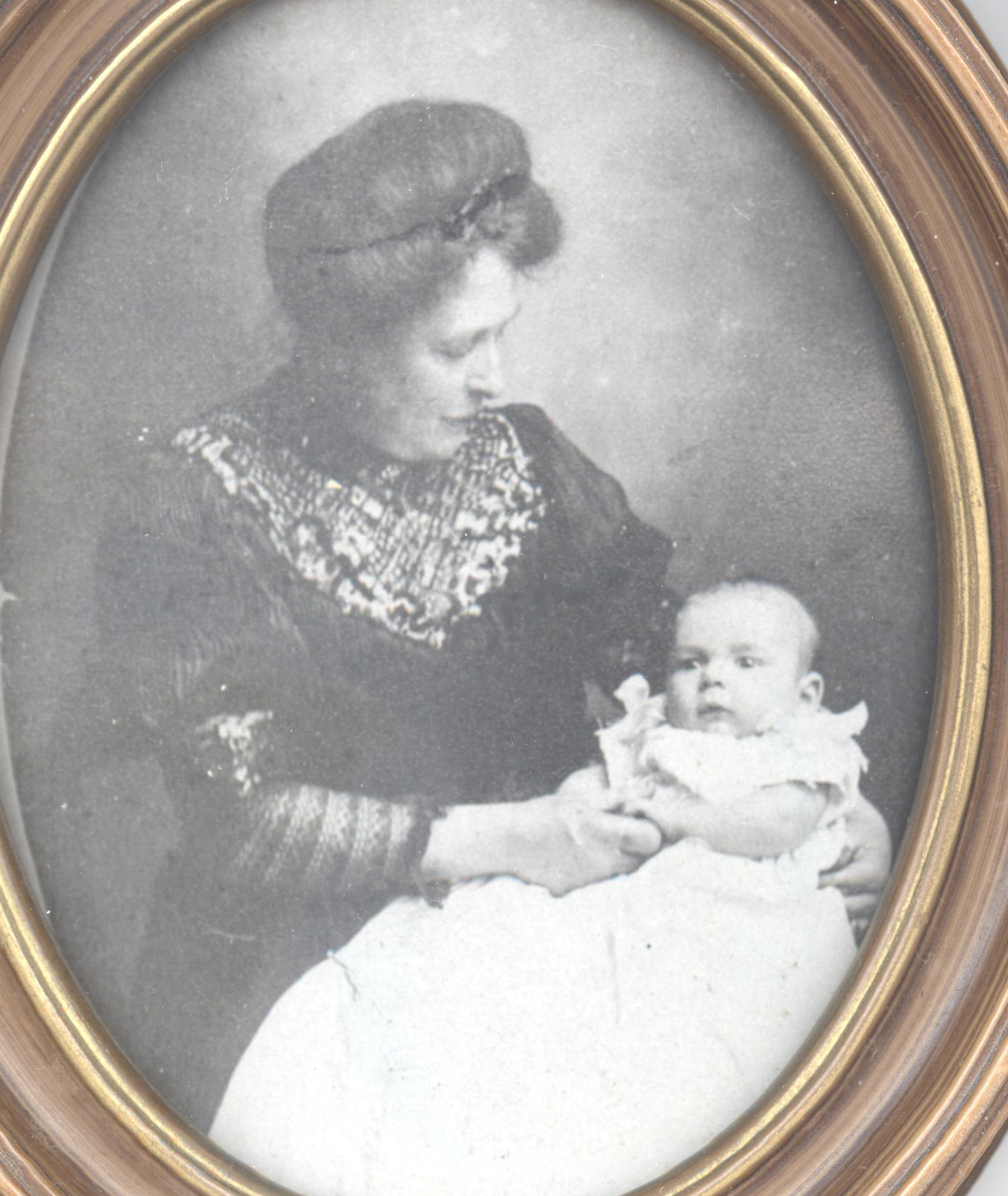
Emma Hawker Field (Pem) – my Nana
My grandmother, Emma Field, or Pem, as the family called her, was deeply grieved over the loss of her Charlie, who was reputed to be a real sweetheart, but like most war widows, she had to struggle on alone. She got a job in a factory, and my mother and uncle became latchkey children. She was also the oldest of five children herself, and in spite of her widowhood, ended up assuming responsibility for helping her siblings and caring for elderly parents.
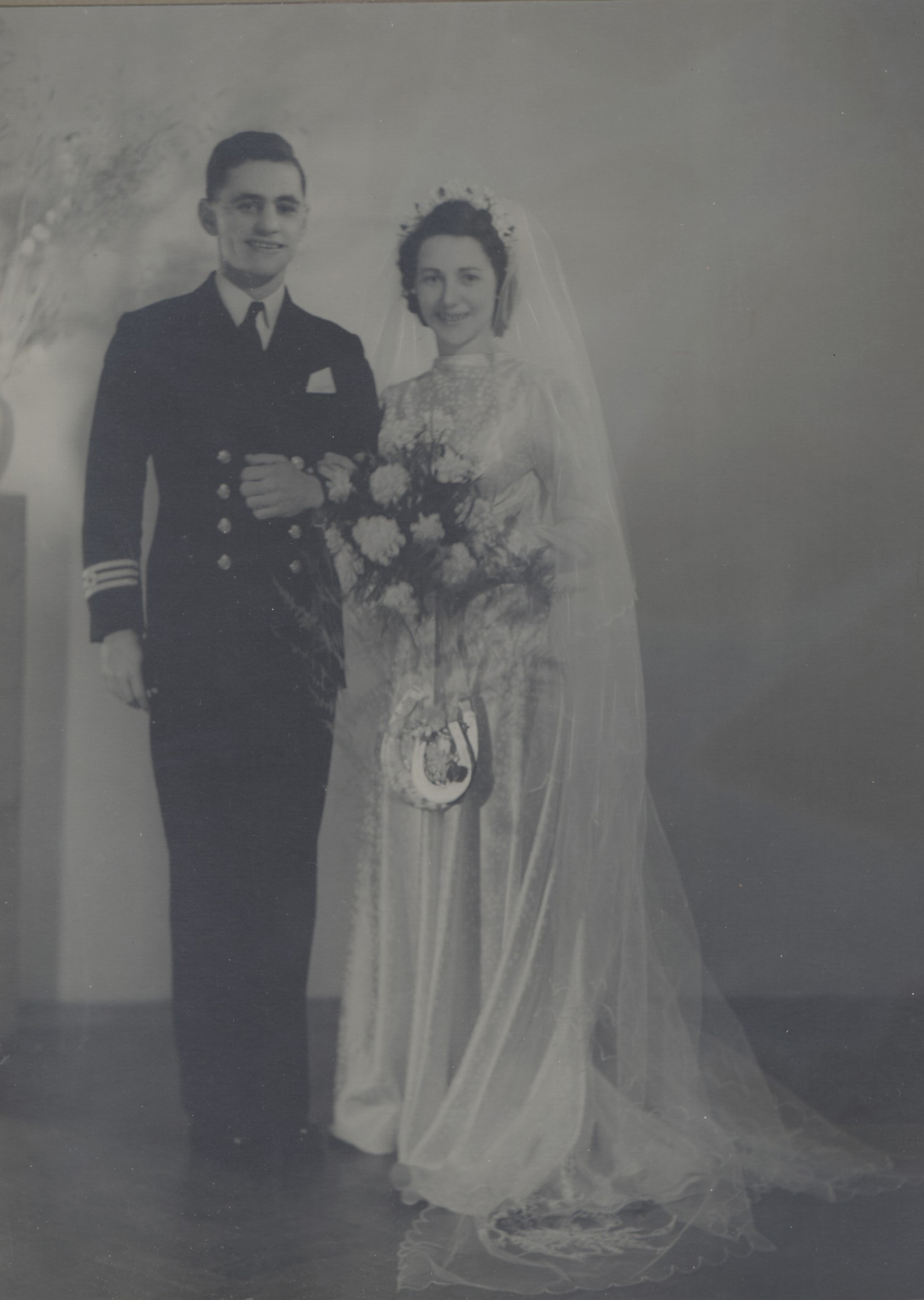
Max and Olive’s wedding
Many years and another World War later, my Nan continued to support the family. My father, who was in the Merchant Navy, married my mother in 1943, so they lived with Nan throughout the war. When my mother was expecting my brother, she complained that she had not known what was more dangerous: Hitler’s bombs or Nan hurling her under the table whenever the sirens went off. My mother also used to relish the tale of how Nan had kept an ‘emergency’ bottle of brandy all through the war, refusing all requests from those who wanted to sample it, only to have it stolen by a burglar who broke in after it was all over.
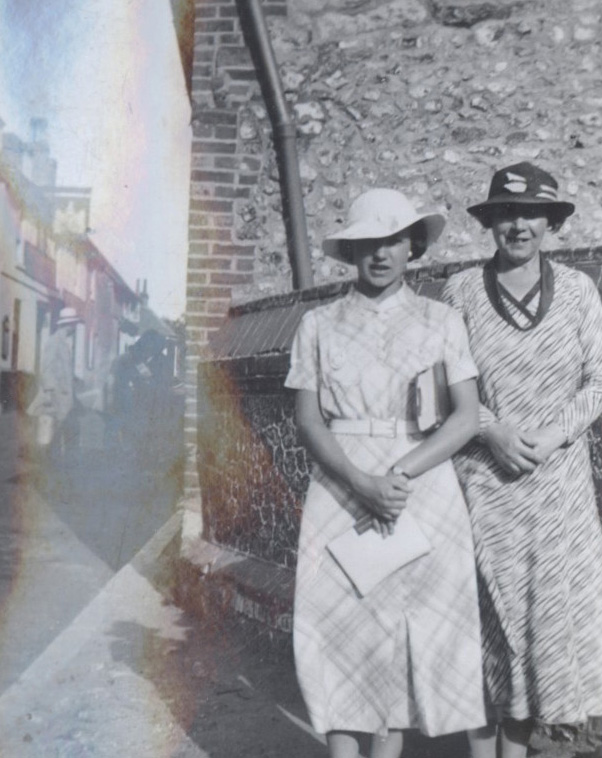
Mum and Nan between the Wars
Our family continued to live with Nan after the war, a situation she had not invited, but had simply put up with in order to help my parents. I remember her as a rather formidable lady who liked her Guinness, had strict rules about not annoying her in her rooms, but who also took my brother and myself on lots of interesting outings. Then, in 1957, my father whisked us away to Canada, and she lost the company of her only grandchildren, though she continued to send us our British comics and write to us during the remainder of her life.
It was only after I’d grown up that I started to appreciate how much heartache she had endured, and how tough she was to maintain her resilient get-on-with-it spirit, no matter what was happening around her. Needless to say, I was delighted when a few years ago, an aunt passed on to me copies of a batch of letters that had been written by ‘Pem’ to her cousin in Australia. I was especially fascinated to see that one of these was dated 1941. Some of this is printed below: It’s a picture of Wartime England from the middle-aged widow’s perspective. Sorry I never got to meet you, Charlie Field, but you’d have been proud of the lady you left behind.
March 22, 1941
Dear Alf,
Received your letter today……. I thought perhaps the mail had gone down. As you know, Mum passed away the 12th of June. She had been very ill all winter. In fact every winter for the last six years she had to stay in her room because of her chest, but the September war was declared, on that same night we had an air raid warning. We thought we were going to be deluged with bombs, and she never really got over the shock. . . . . On Oct. 25th she had a stroke.
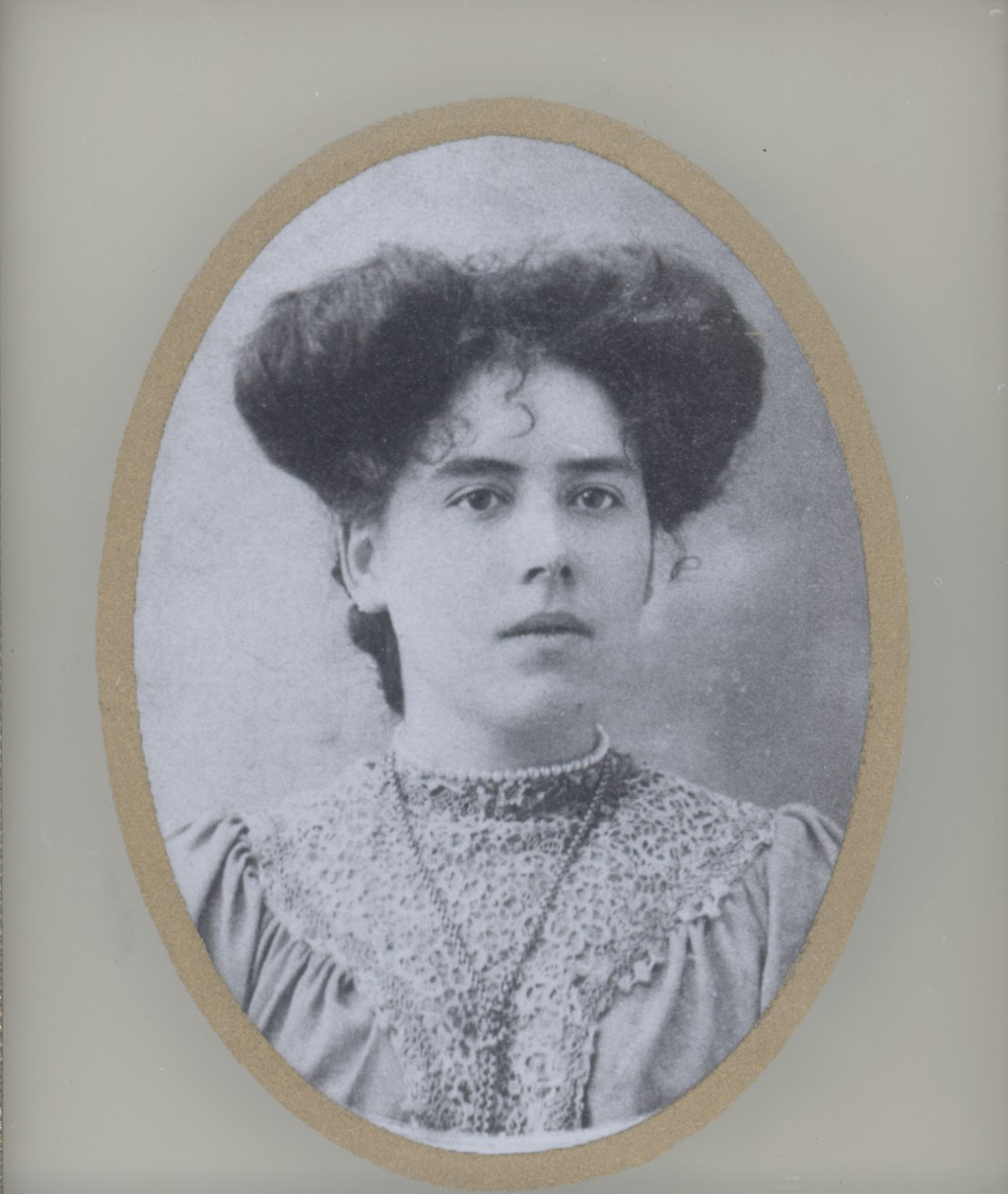
My Great Grandmother
I nursed her for six months, and she seemed to be getting on nicely. Then the posters started about the possible invasion, and the doctor advised me to try and get her away. If it happened, she would not stand the strain. Her friend Mrs. Coburn had moved from Highbury to Ealing, so I took her there while I looked for a house; I had just got this house and was going up to see her when I had the wire asking me to come. But she did not know me. She is buried with Dad at Sutton. Perhaps it is as well she was taken before things got as bad as they are. You say the Londoners can take it. You ought to see what they have taken. Do you remember where Rose lived? It is dreadful round there. Windsor Street’s small houses, not one is standing. The turning is like a waste land. Dean Street . . . not a soul is living there. The homes just smashed up. In one turning, there are five pianos or parts of them in the debris of the different homes. Hitler’s military objective, Highbury, got it dreadful this week. It is appalling the women and children that have been killed. Also the city has been badly bombed, in some parts just ruins. . . . . Do you remember the London Hotel at the corner of Tylers Avenue. That was hit the other week and a lot of civilians killed.
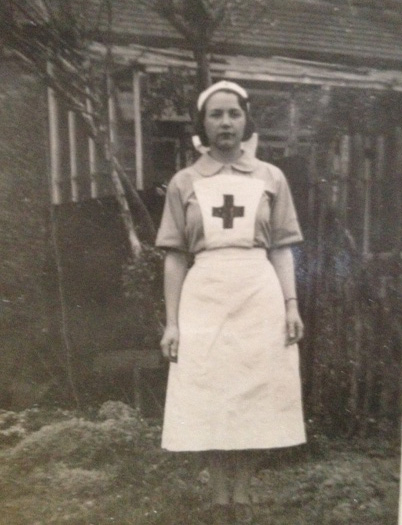
Mum as a VAD
My daughter does nursing all night once a week in a shelter in the city. I do fire watching once a week. I have a tin hat and a whistle to blow should an incendiary bomb drop in our turning. We do different turns all through the night starting at 10 pm until 6 am. . . . . . . . One thing we have to be thankful for is that we have not been really short of food. We don’t get a lot of meat, but the fat ration is very generous really. We have plenty of veg, bread and flour and if people spend a bit more time at their stoves, they can make some real good meals. It means a little more trouble but it is worth it and all helps to win the war, besides helping to keep the nation fit. . . . .
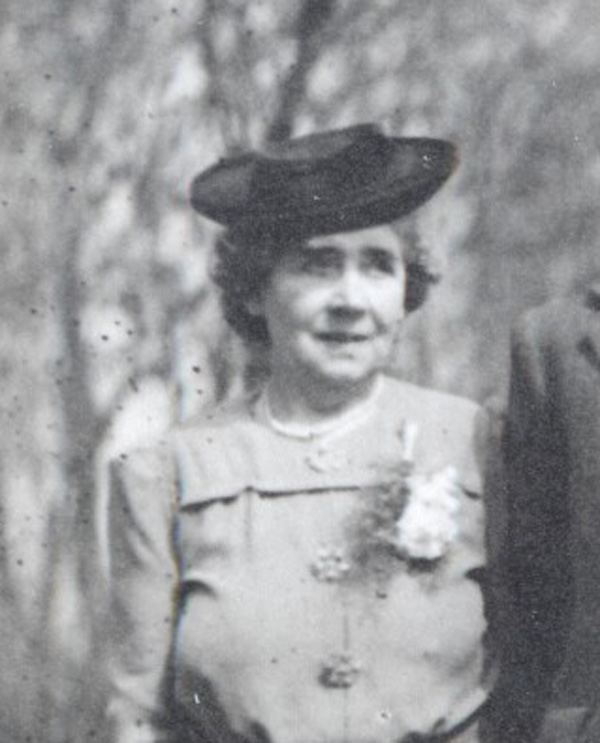
The War Widow in the forties.
Rents went up very high after the last war, but food and clothes got very reasonable the last ten years. Now we are at war again and everything is sky high again, but why worry? Just live from day to day, get what pleasure you can, and try to be just to all. I hope this reaches you. Wishing you and yours all the best.
What a joy it was to write a story set on British Columbia’s beautiful Sunshine Coast. King tides and a raging storm provided the inspiration for my latest mystery tale: Black Beacon Books: An Interview with Elizabeth Elwood
During a Royal visit in March of 1998, it was announced that Prince (now King) Charles, Prince William and Prince Harry would make a visit to Burnaby South High School. Katie, then fourteen, naturally shared the worldwide crush teenage girls had for the young princes, and she and her friends were desperate to snatch their chance to meet the royals. However, the royal visit was scheduled during the school day, and Katie’s school was in East Burnaby. She begged me to let her have the day off, but given the mobs that were predicted, I pointed out that she would never be able to get close to the princes and flatly refused to give her permission to skip school. She was most annoyed with me, but sulkily acceded and set off for school in the morning. When she returned home that afternoon, she looked smug and was unusually quiet. Nothing more was said and I assumed I was forgiven for being the world’s meanest mother. However, when the two local papers were delivered later that week, I realized why my daughter had looked so pleased with herself. There she was, all smiles, on the front page of both papers, along with the headline, “Burnaby Teens Love the Prince”.
Katie was only momentarily abashed to find out that she hadn’t got away with her escapade. However, far from being contrite when I waved the newspaper in front of her face, she was jubilant about her triumph and pleased as punch that she’d been proved right. In spite of the crowds, she had succeeded in talking with all three Royals. Charles, she giggled, had a twinkle in his eye, probably because one of her friends had cheekily handed him a slip of paper with her phone number and asked him to give it to Prince William. Having chuckled and told them they were naughty girls, the future king moved on and left the two young princes to shake hands with and charm the girls. A triumph for the teenagers indeed.
I suppose I should have realized that Katie’s lack of argument was highly suspect and that she would ignore my edict and go AWOL with her friends. I have to admit it was highly enterprising of them to get to the front and actually meet their idols. Hugh and I managed to maintain appropriately disapproving expressions when we remonstrated with her, but we laughed a lot later when we were on our own. Our amiable daughter obviously had an independent spirit and a lot of determination under that docile façade, but what a public way of getting caught out! Those press clippings said it all.
It was such an honour to see my name on the cover of these recent issues of favourite mystery magazines. Mystery Magazine’s December issue contained “The Last Noel”; the January/February issue of EQMM had “The Murder of Sir Henry Baskerville” as the lead story; and “Through the Wall” is in the soon to be published Black Cat Mystery Magazine.
Each of my stories definitely demonstrates the old saying that you should write what you know. “The Murder of Sir Henry Baskerville” not only allowed me to reminisce about the Swinging Sixties, but also let me make use of my many years of theatrical experience. When the actor playing Sir Henry Baskerville plummets to his death from the top of a revolve during the final rehearsal for The Hound of the Baskervilles, naturally, it is the actors playing Holmes and Watson who figure out who fired the fatal shot, but it’s that extra theatrical knowledge that helps them solve the case when the detective sent in to investigate finds himself stumped. All those years backstage in ancient theatres came to very good use.
“The Last Noel” in Mystery Magazine also contained lots of personal memories, this time of the Festive Season – not that we ever had a corpse at our Christmas dinner table. Still, the atmosphere of carols, decorations and Christmas baking is all very real, not to mention the family ups and downs. And could that little gripe of the hostess be real when she complains that, having slogged all day to produce dinner, once she’s cleaned up and is ready to socialize, all the guests who have partied all day decide it’s time to go home?
The most recent story, “Through the Wall” in Black Cat Mystery Magazine, reflects more recent experience. When we moved to the Sunshine Coast in 2019 and hired a contractor to turn our existing cottage into a two-storey house, we never realized what a lengthy and arduous process it would be. Since our house in town sold quickly, we lived in the cottage while the work was done, and daily listened to the hammering and power-tools whining on the other side of the wall. Since the wall was thin, we heard the workmen, too, and presumably, they could hear us. If that alone wasn’t enough to suggest a story, the winter months, with the wind howling through the wood framework, which at that point resembled a castle ruin, created an atmosphere that would have adorned a classic Gothic mystery. I’m so glad that the end product was picked up by Black Cat Mystery Magazine. By the way, No, it wasn’t the contractor who got murdered.
You can find these stories at the links below. All three were great fun to write. I hope you will find them fun to read as well.
When Grannie Forbes falls face first into the Christmas pudding, no one in the family is particularly sorry, but soon the questions begin. Did someone take a hand to ensure that this was her last Noel? It was wickedly fun to write this one! Read it at: https://mysterymagazine.ca/
Don’t miss this Holiday issue of Mystery Magazine. It’s loaded with intriguing festive puzzles for mystery lovers everywhere!
I couldn’t resist answering the call to write a story inspired by one of Alfred Hitchcock’s movies. Being a long-time fan of Daphne du Maurier’s novel, Rebecca, and having enjoyed the film he made of the book, this seemed the perfect choice. But how to write a story that referenced the film, and yet still stood independently – that was the challenge. The solution came to me when I remembered that there had also been a play of Rebecca. I had seen a production of the play when Vagabond Players produced it some years ago and had found it disappointing, for the constrictions of live theatre prevented the playscript from having the dramatic impact that Hitchcock recreated so effectively on film. However, the existence of the play gave me my independent plot. My characters were actors who had starred in the play, and although Rebecca played a strong influence in their lives, their story led in a totally different direction. All the same, I think I managed a Hitchcockian twist at the end. “Rebecca Redux” was great fun to write. I hope readers of the anthology will have as much fun reading it.
Please join me on Wednesday, October 19, at 5:30 p.m. Pacific time for the official launch of Crime Wave: Women of a Certain Age.
My story, titled “The Fair Rosamund and the Summer of Love, is one of 16 mysteries and crime stories in this, our second Anthology, so I hope you can make it!
The event is free, online via Zoom, and open to all, but you do have to register here:
I think you’ll love the Anthology, but if you’re not sure, here are SIX good reasons to grab your copy of the Anthology. Oh, and you can even win a free copy, just by showing up!
You’ll hear a handful of our contributors read from, or talk about, their short stories, and get some insights from Anthology Committee Members on some of the processes that go into creating an anthology from the ground up. Many of the anthology authors will be there, and I hope you will be, too! Here’s a link to our video: https://youtu.be/UrCd8UBjA1Q
Again, it’s free and you don’t even have to dress up to join in! Hope to see you there in a couple of weeks!
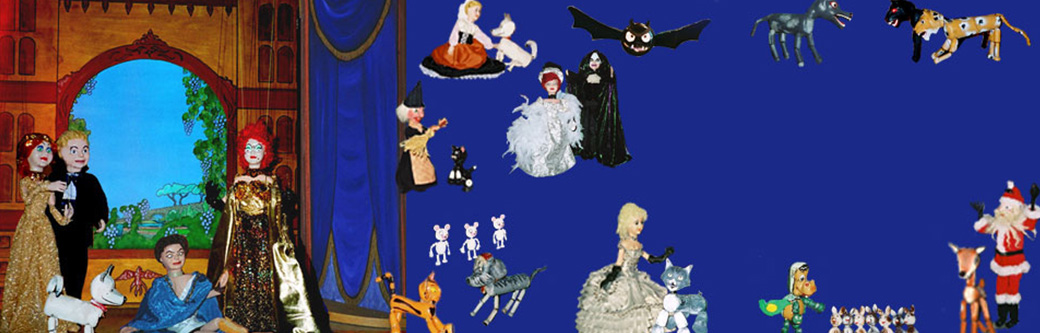
I spent many years recording soundtracks for Elwoodettes Marionettes when I lived in town, but since moving to the coast and having the pandemic put an end to performing, my recording equipment has remained idle. Therefore, I was delighted to receive an invitation to record one of my stories for EQMM’s mystery podcast. This was a wonderful opportunity to re-set up my studio for a new and different challenge. The story, which tells how a light on a lagoon provides the clue that a murder has been committed, can be read in the September/October 2022 issue of EQMM. Alternately, you can listen to it at: EPISODE 156: “The Light on the Lagoon” by Elizabeth Elwood (podomatic.com)


 I love to read mystery stories, new ones hot off the press and old favourites from times past. Currently, I am revisiting much-loved Agatha Christie classics and enjoying the intricate twists and turns of her clever tales. My husband, who shuns fiction—he’s an accountant who considers The Financial Post light reading—says that reading a steady diet of murder mysteries makes me paranoid and that I see sinister plots everywhere, but, ironically, the one time that I became involved in a murder, I had no idea that death was in the air.
 gorgeous blind date: it should have been the perfect night out. How was Lucy to know that someone had murder in mind?
 What happens when The Devil himself yields to temptation? In the case of a libidinous baritone whose long-suffering wife is showing signs of rebellion, a diabolical plot seems to be the answer. In that lazy summer on the French Riviera, a question lingers in the air. Will the Devil get his due? Find out when you read The Devil and the Deep Blue Sea at Black Cat Weekly #117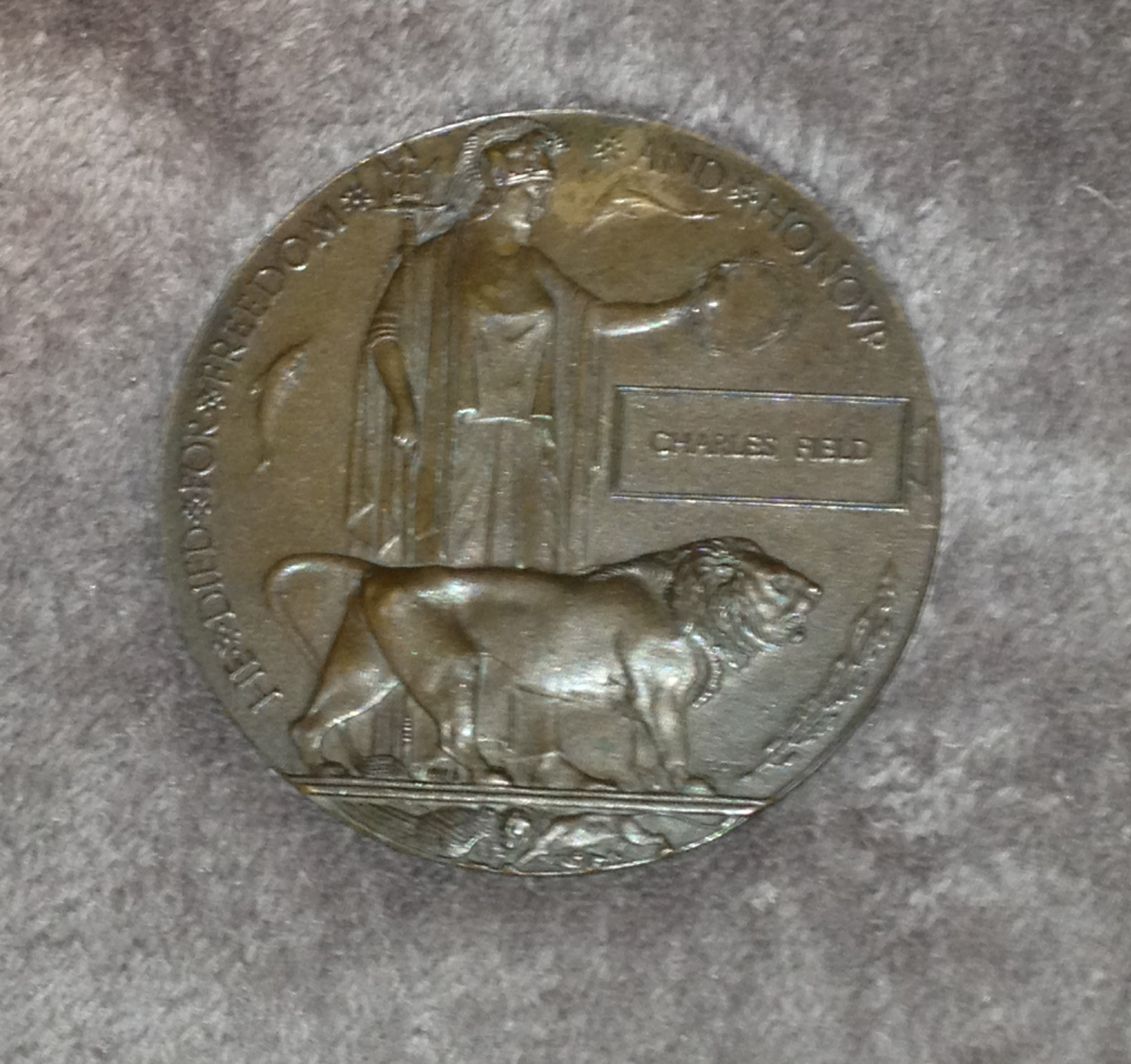



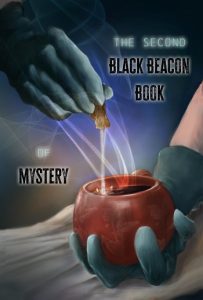 What a joy it was to write a story set on British Columbia’s beautiful Sunshine Coast. King tides and a raging storm provided the inspiration for my latest mystery tale:

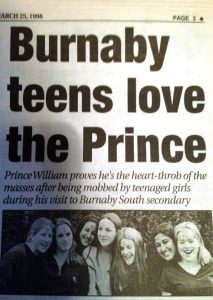 During a Royal visit in March of 1998, it was announced that Prince (now King) Charles, Prince William and Prince Harry would make a visit to Burnaby South High School. Katie, then fourteen, naturally shared the worldwide crush teenage girls had for the young princes, and she and her friends were desperate to snatch their chance to meet the royals. However, the royal visit was scheduled during the school day, and Katie’s school was in East Burnaby. She begged me to let her have the day off, but given the mobs that were predicted, I pointed out that she would never be able to get close to the princes and flatly refused to give her permission to skip school. She was most annoyed with me, but sulkily acceded and set off for school in the morning. When she returned home that afternoon, she looked smug and was unusually quiet. Nothing more was said and I assumed I was forgiven for being the world’s meanest mother. However, when the two local papers were delivered later that week, I realized why my daughter had looked so pleased with herself. There she was, all smiles, on the front page of both papers, along with the headline, “Burnaby Teens Love the Prince”.
 Katie was only momentarily abashed to find out that she hadn’t got away with her escapade. However, far from being contrite when I waved the newspaper in front of her face, she was jubilant about her triumph and pleased as punch that she’d been proved right. In spite of the crowds, she had succeeded in talking with all three Royals. Charles, she giggled, had a twinkle in his eye, probably because one of her friends had cheekily handed him a slip of paper with her phone number and asked him to give it to Prince William. Having chuckled and told them they were naughty girls, the future king moved on and left the two young princes to shake hands with and charm the girls. A triumph for the teenagers indeed.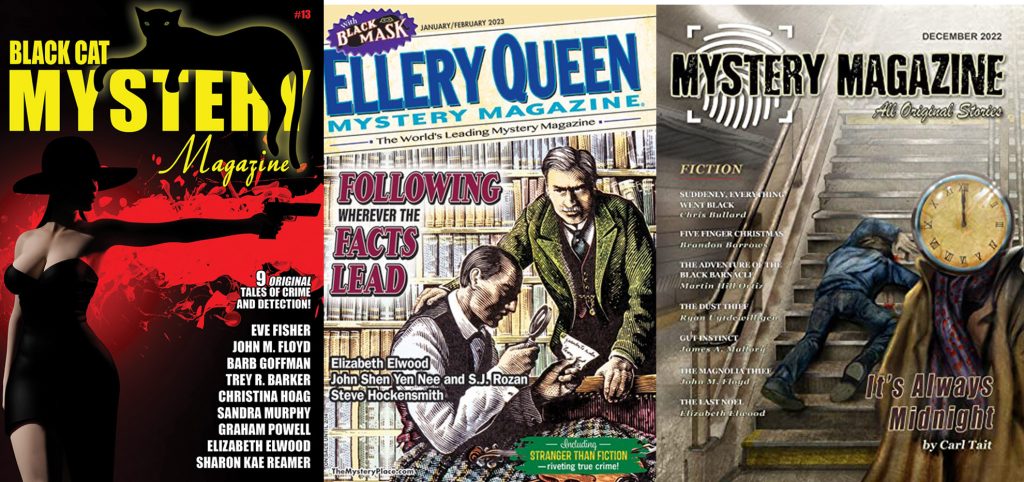
 When Grannie Forbes falls face first into the Christmas pudding, no one in the family is particularly sorry, but soon the questions begin. Did someone take a hand to ensure that this was her last Noel? It was wickedly fun to write this one! Read it at:
 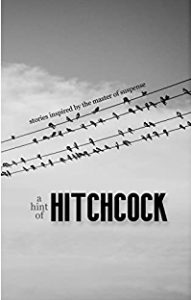 I couldn’t resist answering the call to write a story inspired by one of Alfred Hitchcock’s movies. Being a long-time fan of Daphne du Maurier’s novel, Rebecca, and having enjoyed the film he made of the book, this seemed the perfect choice. But how to write a story that referenced the film, and yet still stood independently – that was the challenge. The solution came to me when I remembered that there had also been a play of Rebecca. I had seen a production of the play when Vagabond Players produced it some years ago and had found it disappointing, for the constrictions of live theatre prevented the playscript from having the dramatic impact that Hitchcock recreated so effectively on film. However, the existence of the play gave me my independent plot. My characters were actors who had starred in the play, and although Rebecca played a strong influence in their lives, their story led in a totally different direction. All the same, I think I managed a Hitchcockian twist at the end. “Rebecca Redux” was great fun to write. I hope readers of the anthology will have as much fun reading it.
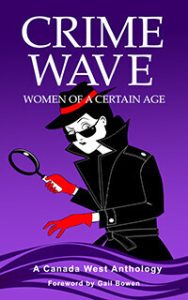 Please join me on Wednesday, October 19, at 5:30 p.m. Pacific time for the official launch of Crime Wave: Women of a Certain Age.
 I spent many years recording soundtracks for Elwoodettes Marionettes when I lived in town, but since moving to the coast and having the pandemic put an end to performing, my recording equipment has remained idle. Therefore, I was delighted to receive an invitation to record one of my stories for EQMM’s mystery podcast. This was a wonderful opportunity to re-set up my studio for a new and different challenge. The story, which tells how a light on a lagoon provides the clue that a murder has been committed, can be read in the September/October 2022 issue of EQMM. Alternately, you can listen to it at: